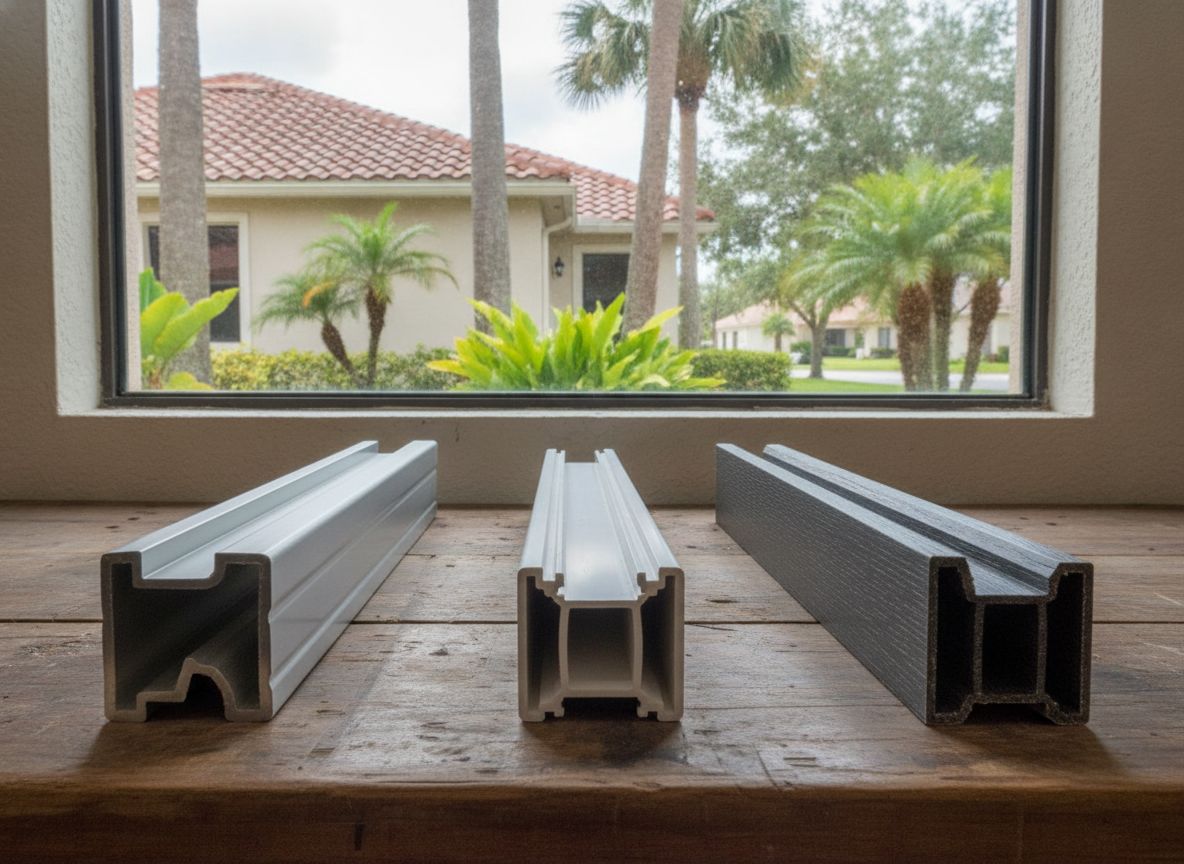
Aluminum: the structural workhorse
Aluminum frames are strong relative to their profile thickness, which is why aluminum has historically dominated impact-rated window and door manufacturing in Florida — a thinner aluminum frame member can carry the same structural load as a much bulkier frame in a softer material, which matters when you're trying to maximize glass area and meet a specific wind-load design pressure. Most heavy-duty commercial and HVHZ-rated products use aluminum for this reason.
The tradeoff is thermal: aluminum is highly conductive, meaning heat moves through the frame easily unless it's engineered with a thermal break (a strip of non-conductive material separating the interior and exterior faces of the frame). Without a thermal break, aluminum frames can contribute to condensation on the interior frame surface in Florida's humidity, and to a lesser degree, indoor heat gain in direct summer sun. Quality aluminum window lines sold in Florida generally include a thermal break for this reason — worth confirming on any product you're considering.
Vinyl: budget-friendly, but heat-sensitive
Vinyl (PVC) frames are popular nationally for their low cost and inherently good thermal performance — vinyl doesn't conduct heat the way aluminum does, so vinyl frames generally test well on U-factor without needing a thermal break. Vinyl also doesn't corrode, which is a genuine plus in a coastal-adjacent, high-humidity climate.
The catch in Florida specifically is heat expansion. Vinyl has a higher coefficient of thermal expansion than aluminum or fiberglass, meaning it expands and contracts more with temperature swings — a real consideration on south- and west-facing exposures that see intense direct sun for years. Over time this can affect seal integrity and, in dark-colored vinyl frames, warping. Vinyl impact-rated lines exist, but structurally, vinyl generally needs to be reinforced (often with internal aluminum or steel stiffeners) to meet the wind-load and missile-impact requirements of a true impact-rated window, especially at larger sizes.
Fiberglass: the newer, more expensive middle ground
Fiberglass frames combine much of vinyl's thermal performance (fiberglass doesn't conduct heat well) with strength characteristics closer to aluminum, and a coefficient of thermal expansion close to that of glass itself — which matters because it means the frame and the glass expand and contract at similar rates, reducing stress on the seal over decades of Florida heat cycles. Fiberglass also resists warping, rot, and corrosion.
The tradeoffs are cost (fiberglass frames typically carry a price premium over both aluminum and vinyl) and somewhat less universal availability — not every manufacturer offers a full impact-rated fiberglass line in every style and size, so availability is worth confirming for your specific project.
Wind-load strength and impact ratings, side by side
For a window to carry an impact rating, the entire frame-and-glass assembly has to pass ASTM E1886 and E1996 testing at a specific design pressure. Aluminum's strength-to-thickness ratio makes it the most common frame material in impact-rated lines, especially for larger openings and higher wind-load requirements. Reinforced vinyl and fiberglass impact-rated products exist and are legitimate options, but the specific product's Florida Product Approval documentation (see our Florida Product Approval guide) is what tells you the actual tested performance for that frame, glass package, and size — not the frame material alone.
Condensation and thermal bridging
Florida's combination of high humidity and strong air conditioning creates a real condensation risk on interior glass and frame surfaces when there's a poorly insulated thermal path from outside to inside. A thermal break in aluminum, or the inherently low conductivity of vinyl and fiberglass, reduces this. If you've noticed persistent condensation on your interior window frames (not between glass panes — that's a different problem, covered in our signs your windows are failing guide), frame material and thermal break quality are worth examining.
Cost and longevity, realistically
Generally, vinyl carries the lowest upfront cost, aluminum sits in the middle to upper range depending on thermal-break quality and profile, and fiberglass carries the highest premium. Longevity favors fiberglass and quality aluminum, with vinyl's lifespan more sensitive to sun exposure and color choice (dark vinyl absorbs more heat and expands more). None of these numbers are one-size-fits-all — the right material depends on your home's orientation, budget, and how long you plan to stay in it.
Request a Free Assessment