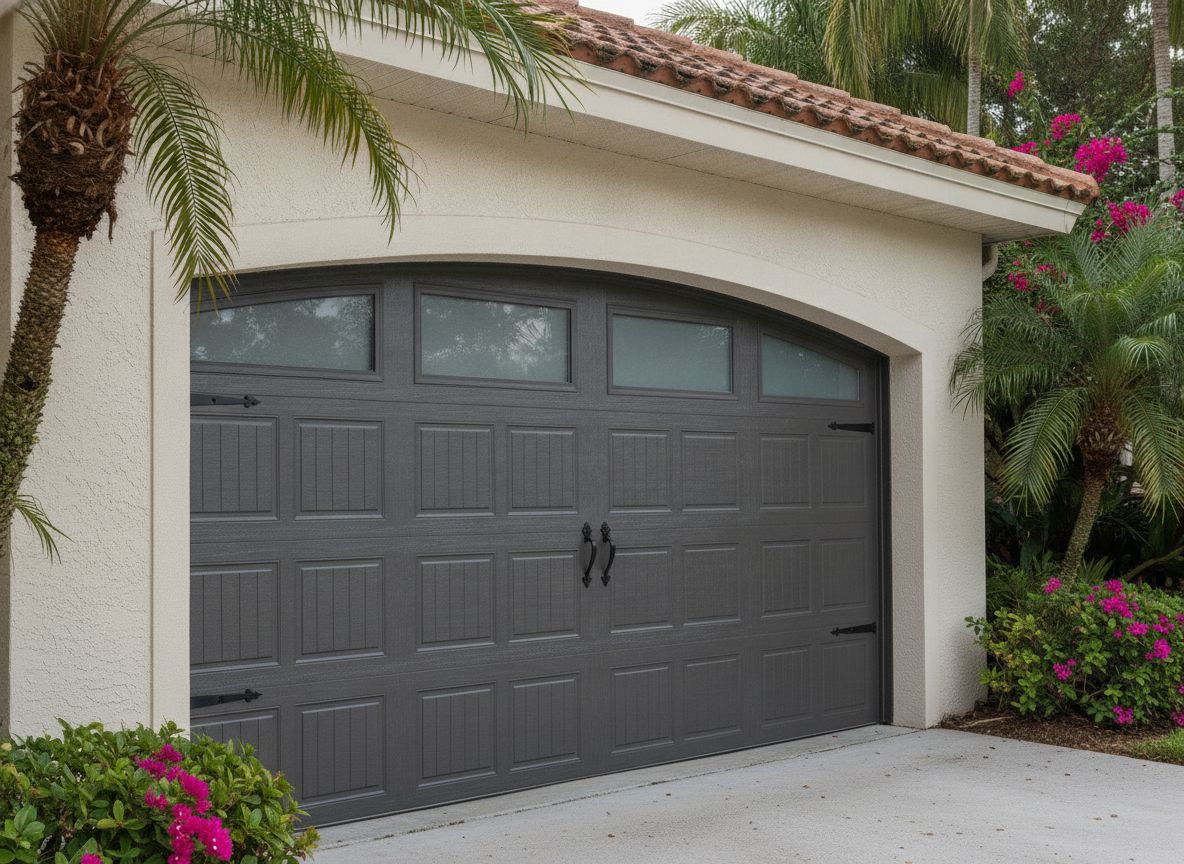
Your garage door is likely the single largest unsupported opening on your house.
A standard garage door wasn't engineered for sustained wind pressure. Once it fails, air pressure inside the garage can push outward on the roof and walls — a well-documented pattern in wind-damage investigations, not a scare tactic.
The largest opening, the least reinforcement
A typical two-car garage door opening is far larger than any window or entry door on the house — often 16 feet or more wide — and it's made of thin panel sections connected by rollers and tracks rather than a solid frame. Under sustained wind pressure, a standard door can bow, buckle, or come off its tracks. Once that happens, wind entering the garage adds internal pressure that pushes against the roof structure from underneath, which is a mechanism investigators have documented repeatedly after major storms.
That's why garage doors deserve the same documentation-first treatment as windows: a specific wind-load and (where applicable) impact rating tested for the exact door and track hardware combination, not just a heavier-looking panel.
Wind-rated vs. impact-rated
Wind-rated (wind load rated) means the door and its bracing/track system has been tested to withstand a specific wind pressure. Impact-rated adds large-missile debris testing on top of that. Depending on your address's code zone, you may need one, both, or neither — we'll check and tell you plainly.
Garage doors are covered by Florida's new sales tax exemption.
Florida's new state sales tax exemption on impact-resistant windows and doors, active July 1, 2026 through June 30, 2029, explicitly includes garage doors alongside windows and entry/patio doors. See our hurricane protection page for the full breakdown of current code requirements and incentives.
What installation looks like
1. Assess address & code status
We check your address against current wind-zone maps — see hurricane protection for the full breakdown.
2. Select door & bracing package
Panel construction, wind-load rating, and impact rating (if needed) matched to your opening size and garage use.
3. Permit
We file with your local jurisdiction using the Florida Product Approval number for the exact door and track hardware.
4. Install
The old door, track, and opener hardware come out; the new door and reinforced track system are set per the manufacturer's tested installation instructions.
5. Final inspection & documentation
Your jurisdiction signs off, and you get the full paperwork packet for your records and your insurer.
Garage doors — common questions
It's typically the largest unsupported opening on a house. A standard, non-rated door can buckle under sustained wind pressure; once it fails, wind entering the garage increases internal pressure against the roof and walls from the inside — a well-documented pattern in wind-damage investigations.
Wind-rated (wind load rated) refers to a door's tested resistance to wind pressure alone, usually through reinforced panels and bracing. Impact-rated adds large-missile debris impact testing on top of that. Depending on your address's code zone, you may need one, both, or neither — we check your specific requirement.
It depends on your specific address relative to the Wind-Borne Debris Region and, rarely, the High-Velocity Hurricane Zone. Most inland Orlando/Orange County addresses fall outside both today. See our hurricane protection page for the full explanation, or ask us to check your address directly.
Yes. Florida's new state sales tax exemption on impact-resistant windows and doors, active July 1, 2026 through June 30, 2029, explicitly includes garage doors alongside windows and entry/patio doors.
Financing is available in many cases, with terms that vary by lender and credit profile. See our financing page for general options.
Get a written quote on your garage door.
Free assessment — wind-load check, product recommendation, and itemized pricing.