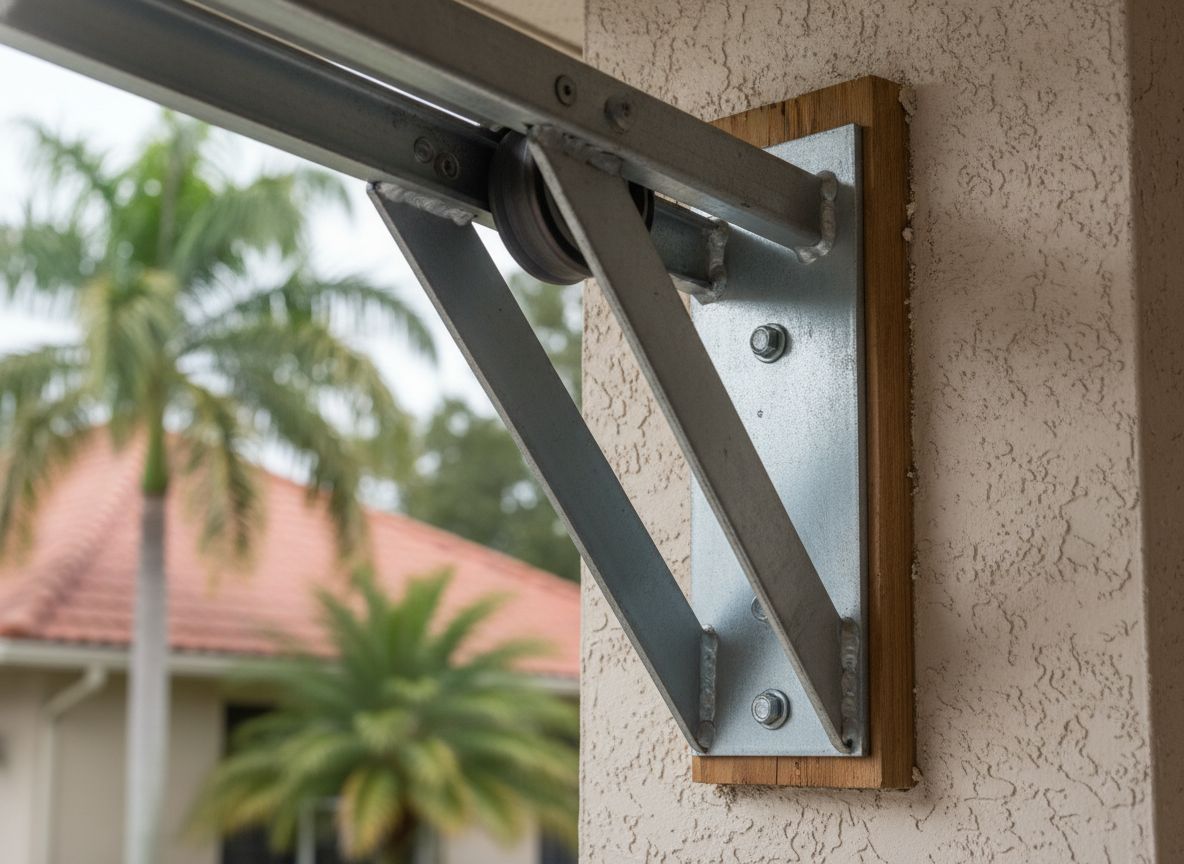
Wind-rated: strength against pressure, not debris
A wind-rated (or "wind load-rated") garage door has been engineered and tested to withstand a specified wind pressure — measured in pounds per square foot — without structural failure. This typically involves reinforced panels, stronger tracks, and heavier-duty end hardware designed to keep the door from buckling, bowing, or blowing out of its track under sustained or gusting wind load.
What a wind-rated door has not necessarily been tested for is impact from flying debris. A door engineered purely to resist wind pressure can still be vulnerable to a wind-borne 2x4, roofing tile, or other projectile striking the panel — the kind of debris that's common in an actual hurricane, not just a straight-line wind event.
Impact-rated: wind pressure plus debris testing
An impact-rated garage door has to clear a higher bar. In addition to withstanding wind pressure, it has to pass debris impact testing — typically involving a large-missile impact test followed by cyclical pressure testing, similar in concept to the ASTM E1886/E1996 testing used for impact windows and entry doors — and be documented under Florida Product Approval or Miami-Dade NOA for that specific door model and size.
In practice, this means an impact-rated garage door has been shown to survive both the pressure of the storm and the debris the storm throws at it, which is a meaningfully more complete test of real hurricane conditions than wind-load testing alone.
Why this distinction matters when comparing quotes
Because both terms get used loosely in sales conversations and marketing materials, it's easy to end up comparing two "hurricane-ready" garage door quotes that are actually offering very different levels of protection — and very different price points — without realizing it. A wind-rated-only door is a legitimate, useful upgrade over a standard unreinforced door, but it is not the same product as a true impact-rated door, and the two shouldn't be treated as interchangeable when you're deciding what your home needs or comparing prices between installers.
This also matters for Florida's new sales tax exemption on hurricane-resistant garage doors (see our article on the 2026 tax exemption) — genuine impact-rated documentation is likely to matter for what qualifies, so knowing which category your quote falls into isn't just a performance question, it may be a cost question too.
What documentation to ask for
Don't rely on a verbal claim that a door is "wind-rated" or "impact-rated." Ask for the specific documentation tied to the exact door model, panel construction, and size you're being quoted:
Florida Product Approval number or Miami-Dade NOA for the specific door — this is the paperwork that ties a tested and approved product to your actual purchase, not just a general product line.
The design pressure rating the door carries, so you can compare it against what your home's wind zone requires.
Whether large-missile impact testing was part of the certification, or whether the rating is wind-load only. If the installer or spec sheet can't answer this directly, that's a sign to ask more questions before assuming the door has impact protection.
A reputable installer should be able to produce this documentation for the specific door and configuration being quoted — not just point to a manufacturer's general marketing claims.
Making the right choice for your home
Whether you need a wind-rated door, a true impact-rated door, or can work with a reinforcement solution on an existing door depends on your specific wind zone, exposure, and any applicable code or HOA requirements at your address — not a one-size-fits-all rule. See our hurricane protection overview for how that assessment works, and our article on why garage doors fail first in a hurricane for the underlying engineering.
Request a Free Assessment