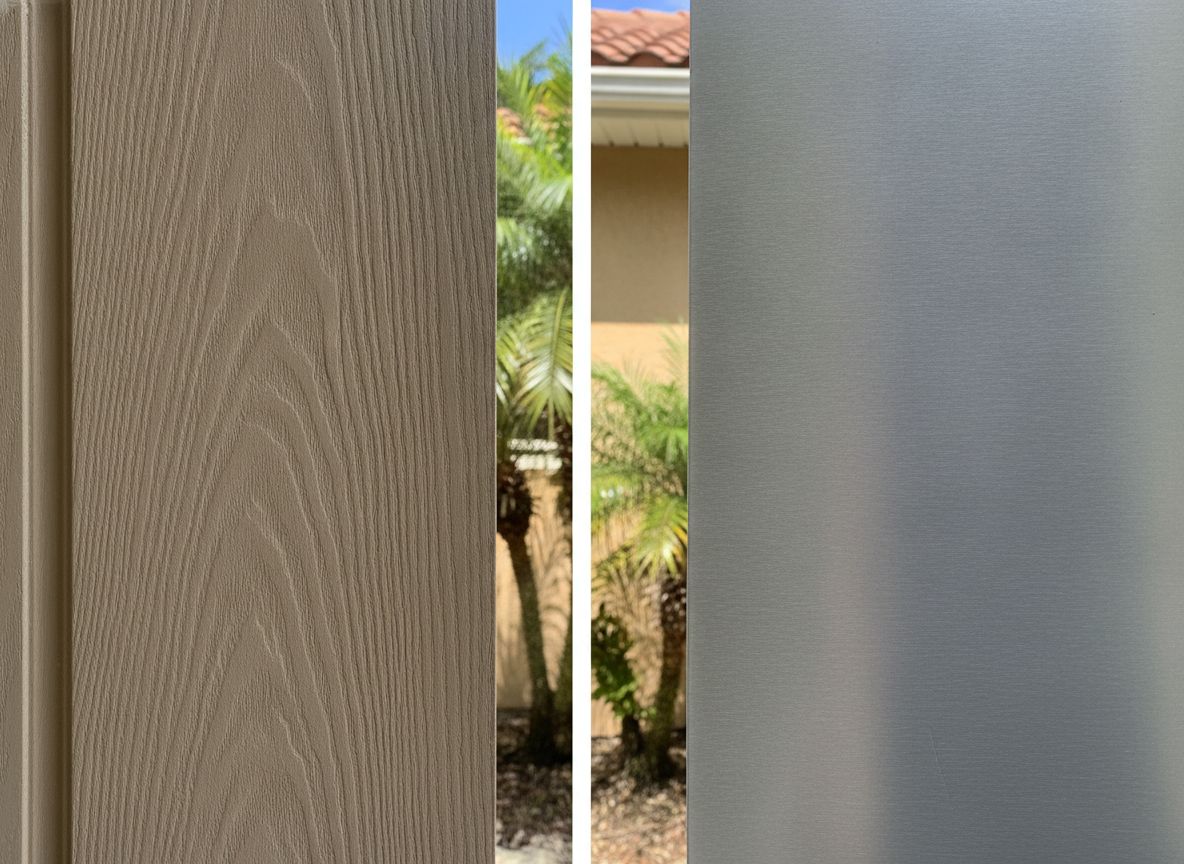
The core matters more than the skin
What's inside an exterior door affects its energy performance far more than what material the outer skin is made of. Modern fiberglass and steel entry doors are typically built with a rigid polyurethane foam core sandwiched between the interior and exterior skins. That foam core is what gives the door its insulating value — a hollow-core or lightly insulated door, by contrast, allows much more heat transfer through the slab itself.
Older doors, especially older wood doors or early steel doors with minimal core insulation, tend to perform noticeably worse here. If your current door feels warm to the touch on the interior side on a hot Central Florida afternoon, that's a reasonable sign its core isn't doing much insulating work.
Weatherstripping and threshold sealing
Even a well-insulated door core doesn't help much if air is leaking around the edges. Weatherstripping — the compressible seal that runs around the door frame where the slab meets the jamb — and the threshold/door sweep at the bottom are what stop conditioned air from escaping and humid outside air from getting in. These components wear out over time: weatherstripping compresses, cracks, or comes loose, and thresholds can wear down or lose their seal as the door is used.
This is worth checking even if you're not planning to replace your door: a $20 fix (new weatherstripping or an adjustable threshold sweep) on an otherwise sound door can meaningfully reduce drafts and humidity infiltration. If you are replacing a door, adjustable, compression-style weatherstripping and a properly fitted threshold are a bigger factor in day-to-day efficiency than most people expect.
Glass lites change the equation
Many entry doors include glass — a small decorative lite, a larger window panel, or sidelites flanking the door. Any glass in a door behaves like a small window and should be evaluated the same way: look for insulated (dual-pane) glass with a low-E coating rather than single-pane glass, which will otherwise undercut the insulating value of an otherwise well-built door. A heavily glazed door with poor-quality glass can perform noticeably worse than a solid slab door with no glass at all, so the glass package deserves as much attention as the door material itself if your design includes significant glazing.
ENERGY STAR and rating labels
Exterior doors sold with an ENERGY STAR label or an NFRC (National Fenestration Rating Council) label have been tested to standardized criteria covering U-factor (insulating value) and, where applicable, solar heat gain. These labels let you compare doors on an apples-to-apples basis rather than relying on marketing language like "energy-efficient," which isn't a regulated or standardized term on its own. See our companion article on door U-factor and energy ratings for how to read those labels.
What a realistic impact on cooling costs looks like
It's tempting to want a specific dollar figure for how much a new door will save on your electric bill, but that number depends on too many variables — your home's overall insulation, duct condition, HVAC efficiency, how many doors you're replacing, your usage patterns, and utility rates — to responsibly generalize. What's reasonable to say is that a door's contribution to your total cooling load is proportional to its share of your home's total exterior surface area, which for a single entry door is typically modest compared to windows, walls, attic insulation, and duct leakage. Replacing a poorly insulated, poorly sealed door will help, particularly if it was a visible source of drafts or radiant heat — but it's most effective as one piece of a broader efficiency picture rather than a stand-alone fix. A licensed HVAC or energy auditor can give you a home-specific estimate if you want hard numbers.
For homeowners bundling a door upgrade with impact windows or a garage door as part of a larger project, see our door material comparison and the hurricane protection overview.
Request a Free Assessment