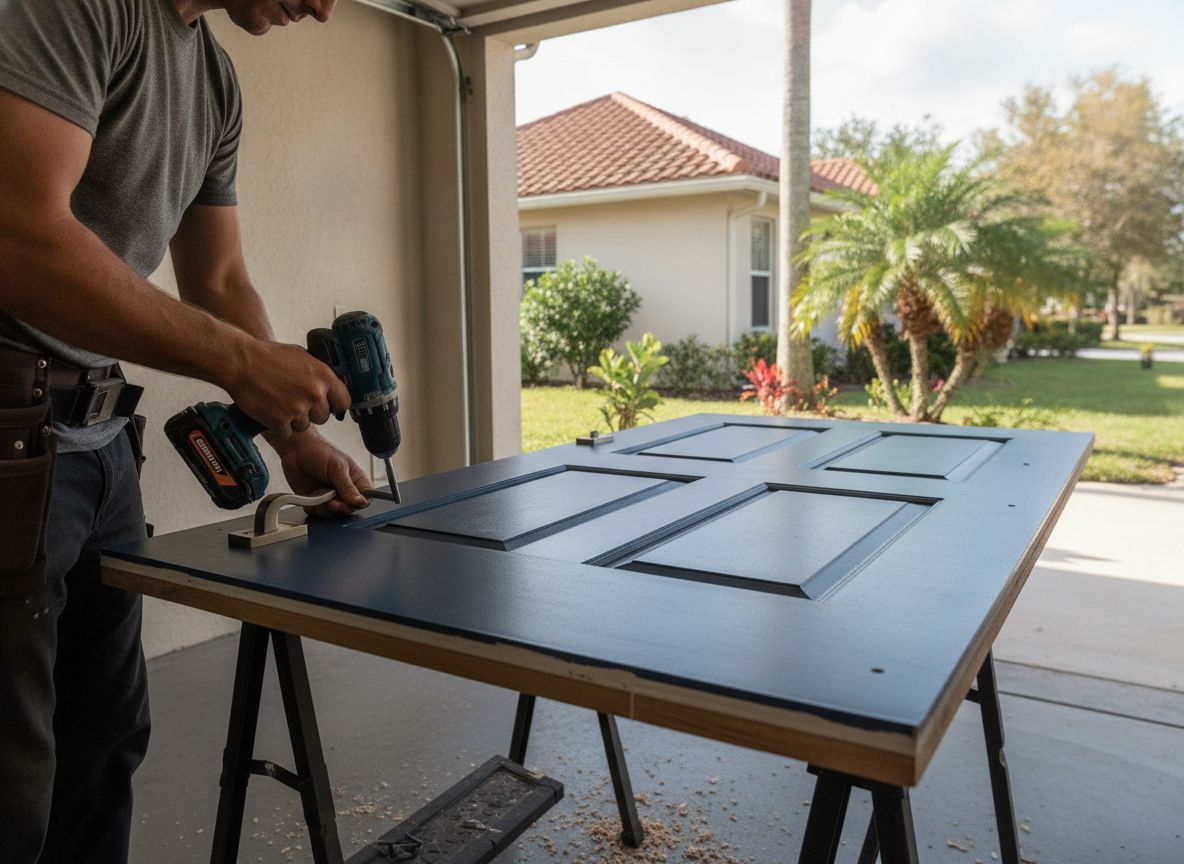
Fiberglass: the most common choice in Florida
Fiberglass entry doors are the most widely installed option in Central Florida, and the climate is a big part of why. Fiberglass doesn't rot, warp, swell, or absorb moisture the way wood can, which matters in a climate where humidity swings are constant and afternoon storms are routine. Quality fiberglass doors can be molded and finished to closely resemble real wood grain, so homeowners don't have to sacrifice that traditional look to get better durability.
Fiberglass doors are also widely available in impact-rated configurations, since the material accepts internal reinforcement and foam-core construction well. Maintenance is minimal — periodic cleaning and, if factory-painted or stained, occasional refinishing — with no risk of rot or insect damage. UV exposure over many years can fade or chalk a fiberglass door's finish, but factory finishes on quality products are generally engineered to resist this for a long service life.
Steel: strong and budget-friendly, with tradeoffs near the coast
Steel entry doors offer strong security and structural performance, typically at a lower price point than comparable fiberglass doors, and are also available in impact-rated lines. A foam core gives steel doors good insulating value similar to fiberglass.
The tradeoffs with steel show up over time and with physical impact. A hard knock — a dropped tool, a bicycle, a thrown object — is more likely to dent a steel door's surface than a fiberglass door, and dents in steel don't pop back out the way minor surface impacts on fiberglass sometimes can. Steel is also more prone to surface corrosion at chips, scratches, or cut edges over time, which is a bigger concern in coastal-influenced parts of Central Florida with salt-air exposure than further inland. A quality factory finish and prompt touch-up of any scratches go a long way toward managing this.
Wood: classic look, highest maintenance demand
Solid wood doors have a warmth and authenticity that fiberglass and steel can only approximate, and some homeowners specifically want that look for a front entry. But wood is the highest-maintenance option by a wide margin in Florida's climate: it expands and contracts with humidity and temperature swings, it's vulnerable to UV fading and surface checking without regular refinishing, and prolonged moisture exposure (even from routine afternoon rain if the entry isn't well protected by an overhang) can lead to warping or rot over time.
Wood is also rarely used in impact-rated door systems, because the material's natural movement makes it difficult to engineer into a consistent, testable impact assembly. Where homeowners want a wood look with better durability and impact-rating compatibility, a wood-grain fiberglass door is generally the more practical choice for Florida.
Cost and longevity compared
Steel doors are typically the most budget-friendly starting point, fiberglass sits at a moderate-to-premium price point depending on finish and glass content, and solid wood tends to be the most expensive both to purchase and to maintain over its lifetime given the recurring refinishing it needs. Get an itemized, product-specific quote for your project.
On longevity, fiberglass and steel doors with quality finishes and foam cores generally offer the longest service life with the least maintenance burden in Florida's climate, which is a major reason they dominate the impact-rated entry door market here.
Matching material to your project
If impact rating is a priority for your home, fiberglass and steel are the practical starting points — see our article on impact entry doors vs. standard entry doors for how that testing works. If low maintenance and long-term durability in Florida's humidity are the priority, fiberglass generally has the edge over steel for surface longevity, while steel often wins on upfront cost. Wood remains a valid aesthetic choice for homeowners willing to commit to its maintenance schedule, typically in covered or less-exposed entries.
For help matching a material and configuration to your specific home, see our entry doors page or the hurricane protection overview.
Request a Free Assessment