What makes a door "impact-rated"
A standard entry door is built for daily use, security, and weather sealing — not for surviving a two-by-four traveling at highway speed. An impact-rated entry door is a different assembly from the frame out. The slab (the door panel itself), the frame, the hinges, and any glass lites are engineered and tested together as a system, not swapped in piece by piece.
The reinforced frame is a big part of what's different. Impact-rated entry systems typically use heavier-gauge steel reinforcement at the frame and strike side, additional anchoring points into the rough opening, and multi-point locking hardware that engages the door at several points along the frame rather than just at the knob and deadbolt. That matters during a storm because wind pressure tries to flex and separate the door from the frame — a standard door can bow or blow open under pressure differential even if the slab itself doesn't shatter.
If the door has any glass — a sidelite, a transom, or decorative lites in the slab — that glass has to be laminated impact glass, built the same way as impact window glass: two panes bonded to an interlayer so the glass can crack under debris impact without opening a hole in the door.
How impact doors are tested
Impact-rated entry doors are tested to the same family of standards used for impact windows: ASTM E1886 and E1996, which govern large-missile impact resistance and cyclic wind pressure testing. A door system has to survive a simulated debris strike and then withstand repeated positive and negative pressure cycling that mimics a hurricane's wind gusts without losing structural integrity. Florida Product Approval or Miami-Dade NOA documentation (depending on where the product was tested and approved) is what verifies a specific door and frame assembly actually passed — ask any installer for that documentation on the exact door and frame combination they're quoting, not just a general claim that the "door line" is impact-rated.
This is also where non-impact-rated hurricane doors — sometimes marketed as "wind-resistant" — differ. A door can be structurally reinforced to handle wind load without ever being tested against debris impact. That's a meaningfully different (and lesser) rating. If a product can't point to E1886/E1996 impact testing specifically, it isn't an impact door regardless of how it's marketed.
Materials: fiberglass, steel, and wood
Fiberglass and steel are the two materials you'll see in the overwhelming majority of impact-rated entry doors, and for good reason — both accept the internal reinforcement and foam-core construction that impact testing requires, and both hold up to Florida's humidity and UV exposure far better than solid wood.
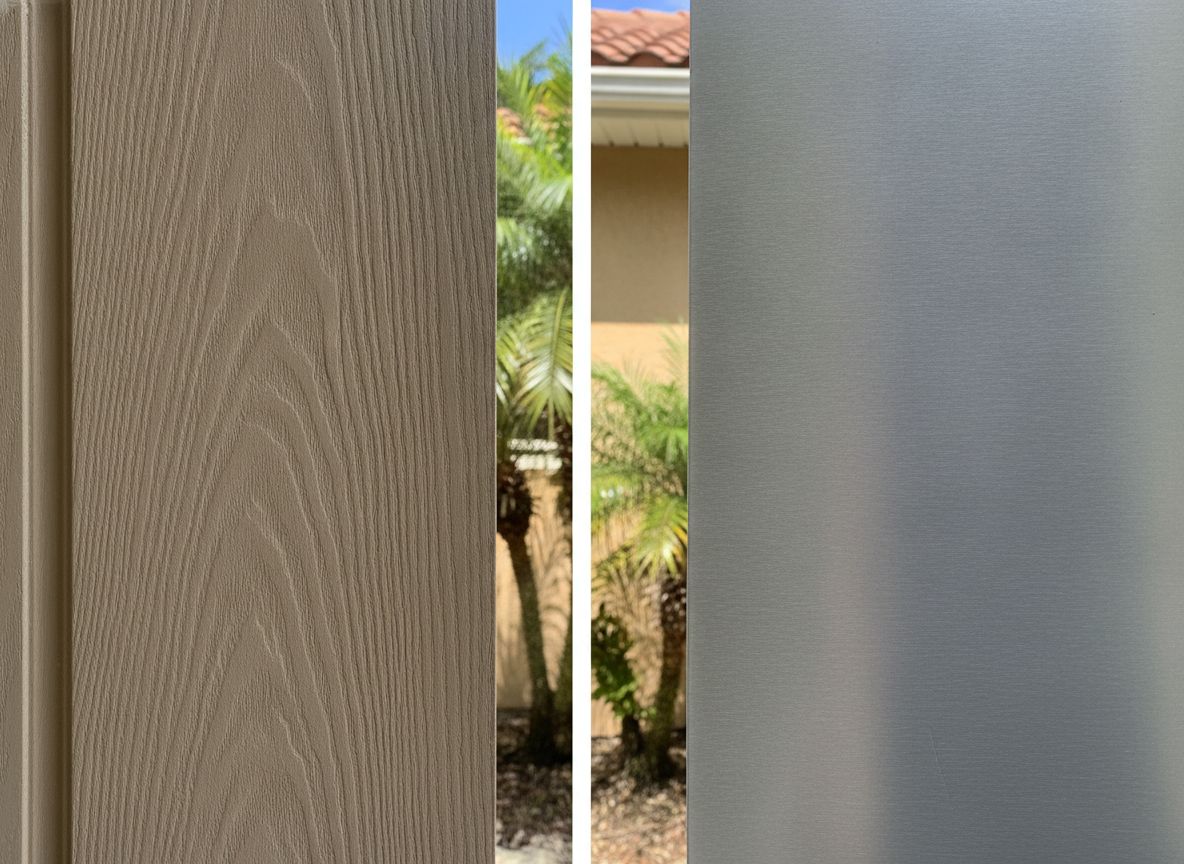
Fiberglass is the most common choice for impact-rated entry doors in Florida. It can be molded to mimic wood grain, it won't rot, warp, or absorb moisture, and its foam core adds both structural rigidity and insulation value. It's also relatively low-maintenance — no annual refinishing the way a wood door needs.
Steel entry doors are also common in impact-rated lines, generally at a lower price point than fiberglass. A steel skin over a foam core is strong and dent-resistant to a point, but steel can dent from a hard impact (a dropped tool, a thrown object) in a way fiberglass tends to resist better, and steel is more prone to surface rust over time at scratches or chips near the coast.
Solid wood is rarely used for impact-rated doors. Wood's natural movement with humidity and temperature makes it difficult to engineer into a consistent, testable impact assembly, and it doesn't hold up as well to Central Florida's heat and moisture swings without frequent maintenance. Where you do see wood in impact-rated systems, it's typically a wood-look fiberglass or composite door — not solid lumber.
What impact entry doors cost compared to standard doors
Expect an impact-rated entry door and frame system to cost meaningfully more than a comparable standard entry door — the reinforced frame, laminated glass (if applicable), and multi-point hardware all add cost over a standard slab-and-frame setup. The exact premium depends on size, glass content, decorative elements, and hardware finish, so get a written, itemized quote for your specific door rather than relying on a general price range.
The cost gap tends to narrow, proportionally, as the door gets more elaborate — a heavily glazed, decorative entry door was already going to be expensive in standard form, so the incremental cost of impact-rating it is a smaller percentage jump than on a plain slab door.
When it actually matters
Whether an impact-rated front door makes sense for your home depends on your specific address, exposure, and whether your local code or HOA requires it — not a blanket rule for all of Central Florida. Homes in wind-borne debris regions, coastal-influenced areas, or those carrying wind mitigation credits on their insurance often have the clearest case for upgrading. Some homeowners also choose to impact-rate the front door specifically because it's a highly visible, frequently used entry point that's worth pairing with impact windows for a consistent whole-home approach, even if code doesn't strictly require it.
The most reliable way to know what applies to your property is to check your specific wind zone and any existing permits or code requirements tied to your address. See our hurricane protection overview for how that assessment works.
Request a Free Assessment