Five window styles, compared honestly for Florida homes.
Every style has trade-offs. Here's how single-hung, horizontal roller, casement, picture, and bay/bow windows actually perform in a Central Florida house — and which are commonly available impact-rated.
Style by style
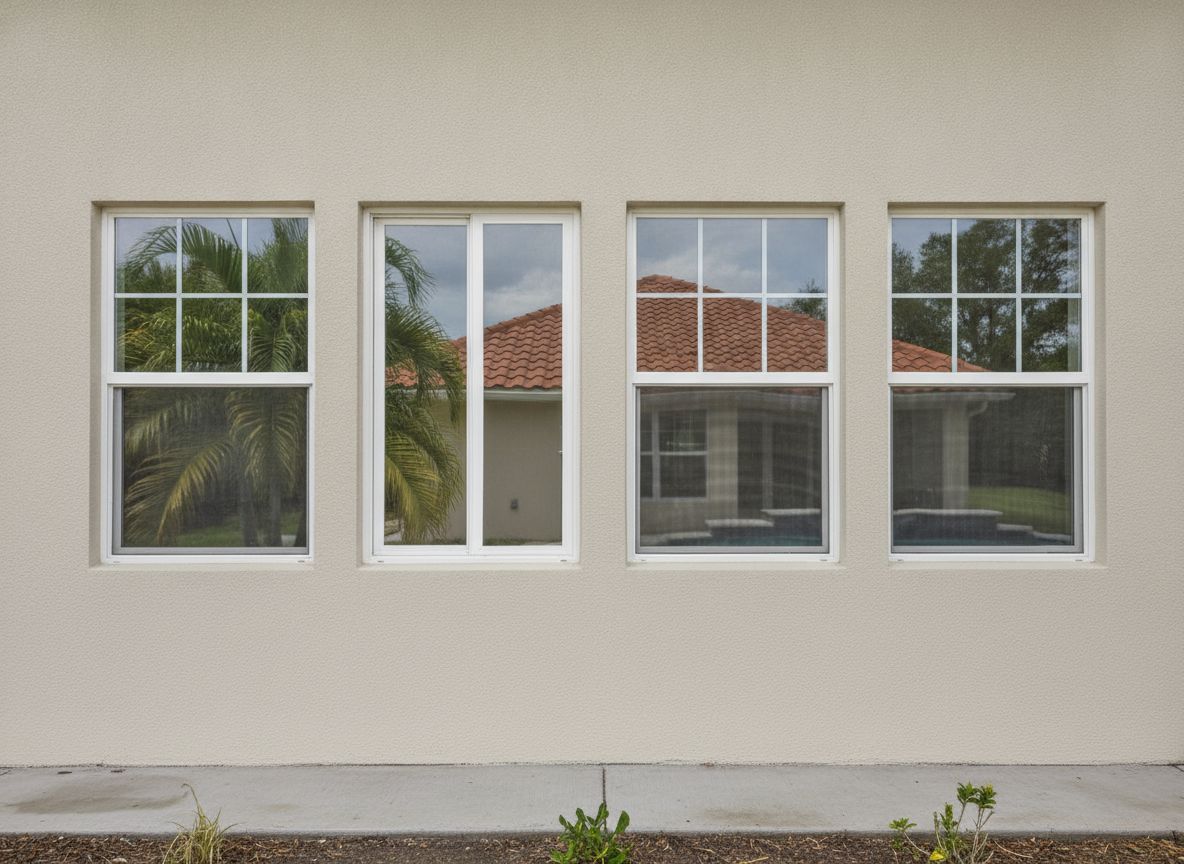
Single-Hung
The bottom sash slides up while the top stays fixed. Widely available impact-rated and typically the most budget-friendly option for a like-for-like replacement. Best for standard bedroom and living-area openings where a classic look and easy resale familiarity matter more than ventilation area — only the bottom half opens, so airflow is limited compared to a horizontal roller of the same size.
Horizontal Roller
One or both sashes slide side to side on a track. Widely available impact-rated, and a common match for the wide, low window openings found in many Central Florida ranch-style and 1970s-80s homes. Good ventilation area since a full sash panel slides open, and generally easier to operate than a single-hung at a wide opening. Screens sit on the exterior track, which means slightly more exposure to weather and debris buildup than an interior screen.
Casement
Cranks outward on a hinge like a door. Available impact-rated from several manufacturers. Because the sash compresses against the frame when closed (rather than sliding past it), casements typically seal tighter against wind-driven rain than a slider — a real advantage in Florida's rainy season. The trade-off: they need exterior clearance to swing open, so they're a poor fit close to a walkway, patio, or property line.
Picture / Fixed
Doesn't open at all — glass only. Commonly available impact-rated, and often the most cost-effective way to get a large, unbroken view (over a kitchen sink, flanking a front door, in a great room). Because there's no operating hardware to test and maintain, it's also one of the simpler assemblies to get impact-certified at larger sizes. The obvious limit: zero ventilation, so it's usually paired with an operable style nearby.
Bay / Bow
A multi-panel projection that extends outward from the wall, usually combining fixed and operable units. Available impact-rated, but it's a more complex structural assembly — the projecting frame needs proper support and flashing, and pricing runs higher than a same-width flat installation. Best suited to a dining nook, primary bedroom, or living room where the extra floor space and curb appeal justify the cost.
We'll match style to opening
Opening size, HOA rules, existing exterior trim, and budget all factor in. Bring us your address and we'll recommend specific styles per room at the free assessment — not a one-size-fits-all pitch.
Read the full impact-window breakdown
Once you've picked a style, our impact windows page covers what the testing standards mean, what documentation you should receive, and what installation involves.
Window styles — common questions
Single-hung and fixed/picture windows are typically the most budget-friendly per square foot, since they use simpler hardware. Bay/bow windows carry the highest cost due to the structural framing involved. Exact pricing depends on size, glass package, and frame material — we quote it in writing at the assessment.
Single-hung, horizontal roller, casement, and picture windows are all commonly available impact-rated from multiple manufacturers. Bay/bow assemblies are also available impact-rated but involve more structural engineering, so availability and lead time can vary more by manufacturer.
Casement windows tend to seal tightest against wind-driven rain because the sash compresses into the frame rather than sliding past a track. That said, any properly installed, correctly flashed window — regardless of style — should perform well; installation quality matters as much as style choice.
No. Many Central Florida homes mix styles by room — a fixed picture window in a great room, casements in a kitchen over the sink, single-hung in bedrooms. We'll help you choose per opening rather than force one style across the whole house.
Some HOAs do restrict exterior appearance, grid patterns, or color. We can help document your project for HOA approval as part of the process — see HOA & Commercial for more.
Not sure which style fits your home?
Free assessment — we'll recommend styles per room, in writing.