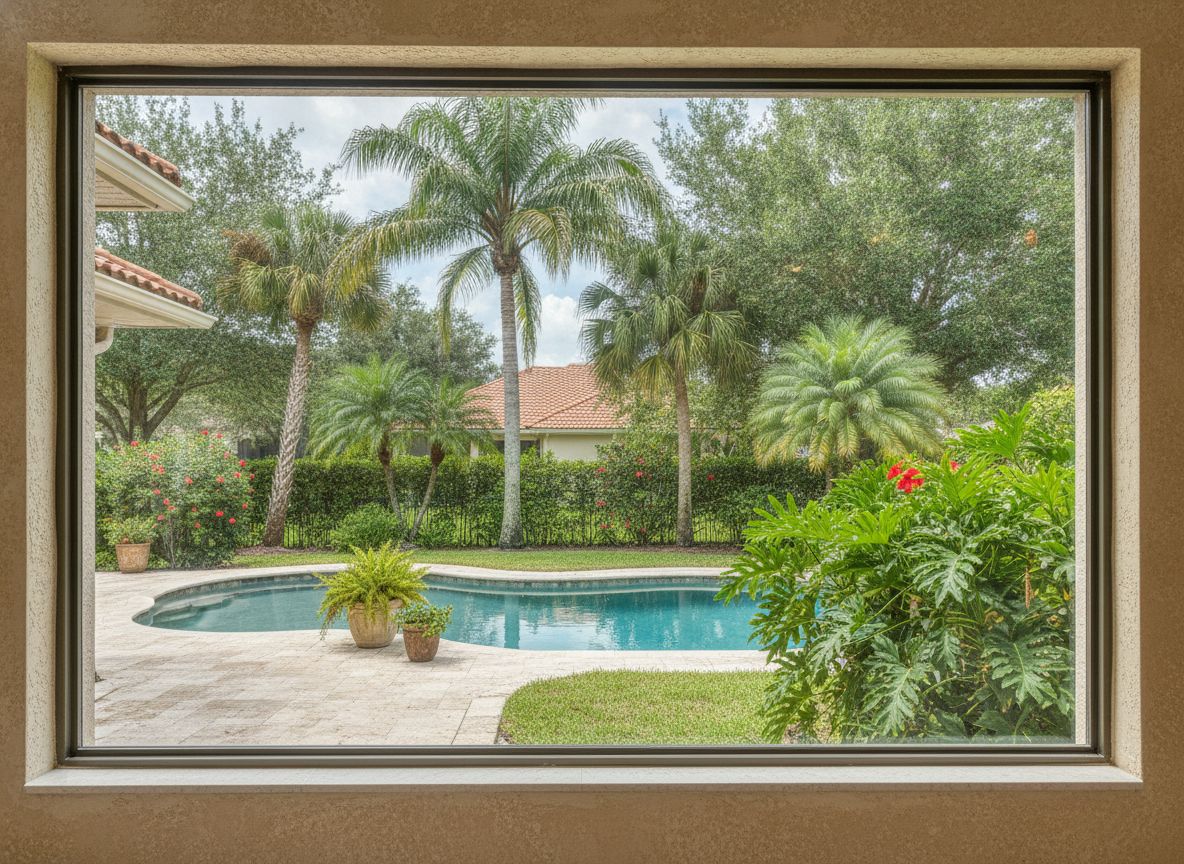
What a picture window is
A picture window is a fixed, non-operable window — it doesn't open, tilt, or slide. Because there's no sash, hardware, or moving parts to accommodate, the entire frame opening can be filled with glass, which maximizes both the view and the amount of natural light entering a room. Picture windows are commonly used where an unobstructed view matters most: living rooms, great rooms, dining areas, and anywhere a homeowner wants the window itself to disappear visually and let the outdoor scene take over.
Why fixed glass performs well structurally and thermally
A fixed window has fewer places for air and water infiltration than an operable window, since there's no sash-to-frame seam that has to seal and reseal every time the window opens and closes. That structural simplicity generally translates to strong energy performance — a well-built fixed unit with a quality low-E glass package and insulated or laminated glass can often outperform an operable window of the same size, simply because it has fewer moving-part compromises built into the design.
How impact-rating works for large fixed glass
Because picture windows are often specified in larger sizes — filling an entire wall opening — the glass and frame have to be engineered to resist wind-borne debris impact and the cyclic pressure that follows during a storm, the same as any other opening on the home. Impact-rated fixed glass typically uses laminated glass, where an interlayer (commonly PVB or a similar polymer) bonds two or more panes of glass together so that, if the glass is struck and cracks, the pane stays intact in the frame rather than falling away or blowing through. As window size increases, the glass thickness, interlayer, and frame reinforcement all have to scale accordingly — a large picture window opening is not simply a bigger version of a small impact-rated window, it's a distinct engineering calculation, and the specific size and configuration needs its own Florida Product Approval or Miami-Dade NOA documentation covering that size range. Always confirm the documentation covers the actual dimensions of your opening, not just the product line in general.
Pairing fixed glass with operable windows for ventilation
Because a picture window doesn't open, it's rarely used as the only window in a room — it's most often paired with operable units (single-hung, casement, or sliding windows) on either side or above/below to provide ventilation while the picture window handles the view and light. This combination approach is common in Florida homes: a wide fixed center panel flanked by narrower operable units gives you the best of both — a clean, unbroken view through the largest pane, with functional airflow available when you want it through the smaller operable sections. When planning a room's window layout, it's worth deciding upfront how much ventilation you actually want versus how much uninterrupted glass you want, since that ratio drives the whole design.
Energy performance considerations
Because picture windows tend to be larger than average, their U-factor and SHGC ratings matter proportionally more to a room's total heat gain — a large expanse of glass with a poor SHGC rating can meaningfully increase cooling load, especially with west or south exposure. This is a case where it's worth prioritizing a lower SHGC glass package even if it costs slightly more, precisely because the window is large enough that the rating has an outsized effect. As with any window purchase, ask for the NFRC-labeled U-factor and SHGC for the specific glass package being quoted.
Maintenance and practical trade-offs
The obvious trade-off with a fixed window is that it cannot be opened — no airflow, no ability to vent smoke or odors through that opening, and exterior glass cleaning may require reaching further or using a different method than an operable sash that tilts in for cleaning from inside. For most homeowners, this is an acceptable trade for the view and light a large fixed pane provides, especially when paired with operable windows elsewhere in the same room or home for ventilation needs.
Is a picture window right for your space?
Picture windows make the most sense where the view is the priority — facing a pool, a landscaped yard, or an open living space — and where ventilation is already handled by an adjacent door, operable window, or the home's HVAC system. If a specific room needs cross-ventilation as a primary function, a full operable window or an operable-plus-fixed combination is usually the better layout. Either way, the impact-rating documentation and energy ratings should be confirmed for the specific size and configuration you're ordering, not assumed from a general product line.
Request a Free Assessment