Two different terms that get confused constantly
"High-Velocity Hurricane Zone" and "Wind-Borne Debris Region" are not the same thing, and mixing them up leads to a lot of confusion about what's actually required for an Orlando home. They're two separate, distinct tiers of Florida's wind-resistance requirements, with different geography and different rules.
High-Velocity Hurricane Zone (HVHZ) — Miami-Dade and Broward only
HVHZ is Florida's strictest construction tier, and it applies only to Miami-Dade and Broward counties. It requires products approved under a Miami-Dade Notice of Acceptance (NOA), which involves more rigorous testing protocols — including TAS 201, 202, and 203 — than products approved elsewhere in the state. Orange County, where Orlando sits, is not in the HVHZ and never has been. If you're comparing notes with someone whose home is in South Florida, understand that their code requirements are simply not the same regime as yours.
Wind-Borne Debris Region (WBDR) — broader, and tied to wind speed and coastal proximity
The WBDR is a separate category that applies outside the HVHZ, generally covering areas that are: within one mile of the coast in locations with a 130+ mph design wind speed, or anywhere in the state with a 140+ mph design wind speed regardless of coastal proximity. Where the WBDR applies, new construction and covered renovation work require impact protection on openings — either impact-rated glazing or code-rated shutters — because wind-borne debris (not just wind pressure alone) is the design concern being addressed.
Most inland Orange County addresses, including most of the Orlando metro, currently fall outside the WBDR under the design wind speeds that apply there today. That means impact protection for a typical inland Orlando home is generally not currently code-mandated the way it would be for a coastal Florida property — it's a choice driven by insurance, storm preparedness, and value, not a permit requirement, for most inland parcels today.
This is a real thing that's about to shift
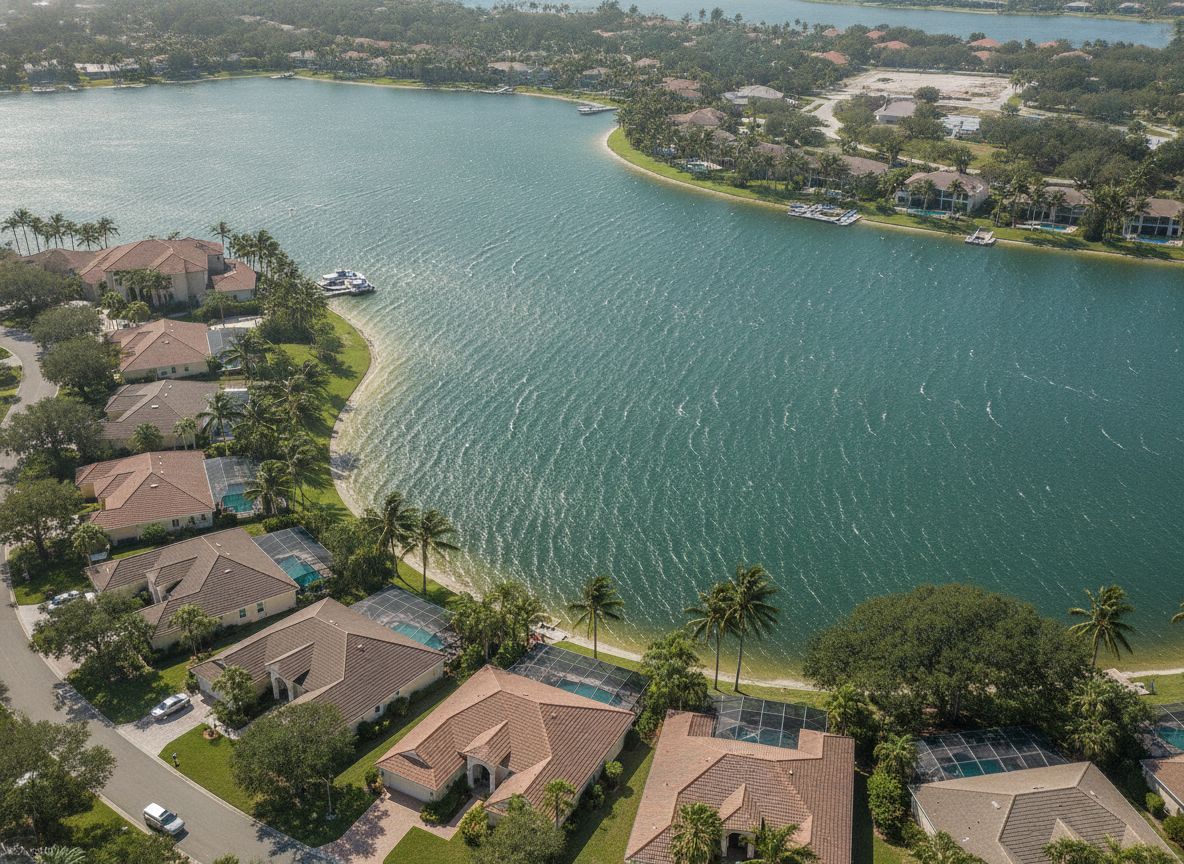
This is not a static picture. The incoming 9th edition of the Florida Building Code, effective December 31, 2026, adopts the newer ASCE 7-22 wind maps, and early analysis of those maps suggests the WBDR boundary is likely to expand to cover some inland, lake-adjacent areas that are currently outside it — specifically, locations near large lakes with enough open-water wind fetch to generate higher design wind speeds. Central Florida's own lakes are being watched closely here: the Lake Apopka area, Lake Conway, and the Butler Chain of Lakes have all been flagged as plausible candidates for inclusion once the new maps take effect.
We want to be precise about what this is and isn't: it is a real, specific, upcoming regulatory change tied to a real effective date (December 31, 2026) — not a hypothetical or a scare tactic. It is not yet in effect, and exactly which parcels end up inside the expanded boundary won't be fully settled until the new maps are formally adopted and applied. If your property is near one of these lakes, that's a genuine reason to ask a licensed professional to check your specific situation rather than assume either way.
How to actually find out where your home stands
The wind zone classification that applies to a given parcel is address-specific — it depends on your exact location relative to the coast and to qualifying bodies of water, not just your city or ZIP code. The reliable way to find out is to have a licensed contractor or engineer check the current wind-zone designation for your specific address against the Florida Building Code maps currently in force.
We're glad to look up your address as part of a free assessment, so you know whether you're currently inside HVHZ (you're not, if you're in Orlando), inside the current WBDR, or outside both — and, if you're near one of the lakes mentioned above, what to watch for as the 9th edition takes effect.
Why this matters even if you're outside both zones today
Being outside the HVHZ and the current WBDR means impact protection isn't code-required for your home right now — it does not mean impact windows and doors provide no benefit. Wind mitigation insurance credits, storm preparedness, noise reduction, and forced-entry resistance are all real reasons Orlando homeowners choose impact products even without a code mandate. See our guide on whether impact windows lower your insurance premium for more on the insurance side specifically.
What to do if you're planning a project soon
If your home is near one of the lakes likely to see WBDR expansion, or if you're simply unsure which zone applies to your address, it's worth getting a professional determination before you finalize product specs for a window or door project — particularly if your timeline runs close to the December 31, 2026 code transition. We cover that transition in more detail in our Florida Building Code 2026 update guide.
Request a Free Assessment